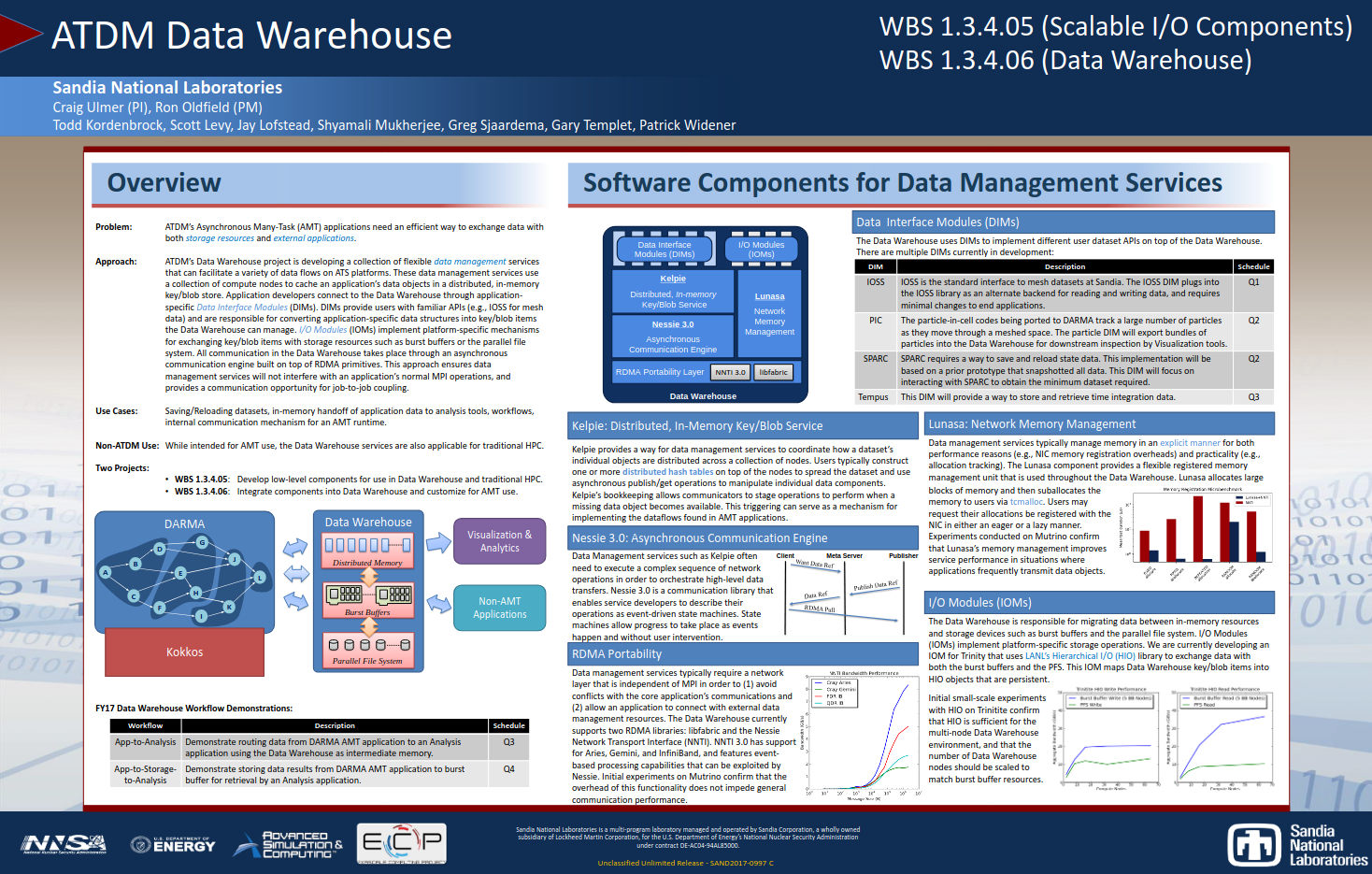
Supercomputers and Data-Warehouse Appliances

2013-08-13 Tue
io pub

We published an unclassified unlimited release (UUR) paper.
Abstract

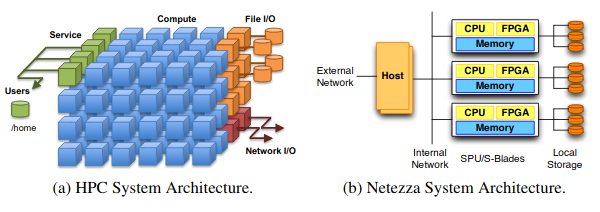
Two decades of experience with massively parallel supercomputing has given insight into the problem domains where these architectures are cost effective. Likewise experience with database machines and more recently massively parallel database appliances has shown where these architectures are valuable. Combining both architectures to simultaneously solve problems has received much less attention. In this paper, we describe a motivating application for economic modeling that requires both HPC and database capabilities. Then we discuss hardware and software integration issues related to a direct integration of a Cray XT supercomputer and a Netezza database appliance.

Publications

Leveraging KeyValue Stores in HPC

2013-04-22 Mon
hpc

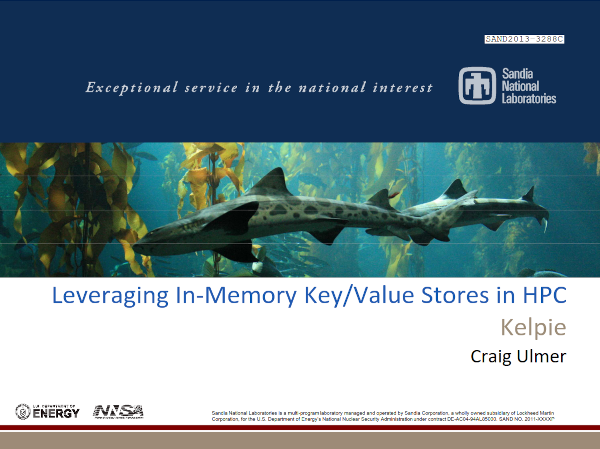
I have an unclassified unlimited release (UUR) talk at Salishan about our recent Key/Value store work in HPC.
Presentations

Defense Program Award

2012-09-11 Tue
fpga clusters

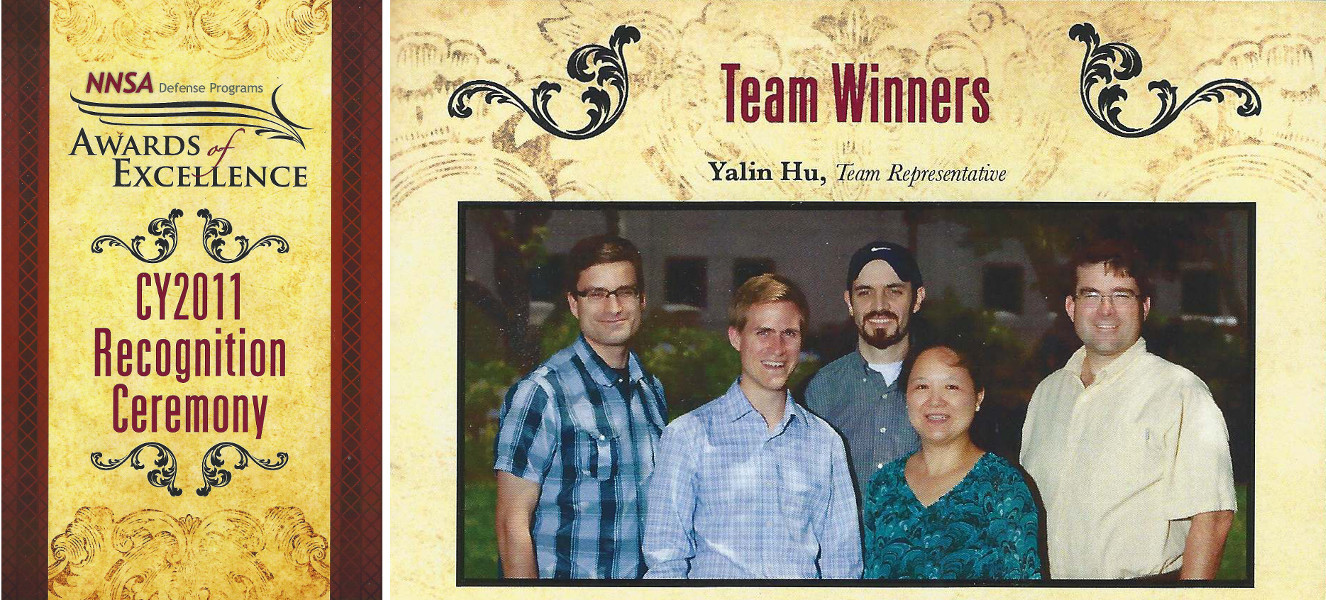
A team I was on won an NNSA Defense Program Award of Excellence.
Detecting Web Attacks in Hardware

2011-02-01 Tue
fpga ml security net pub bestof

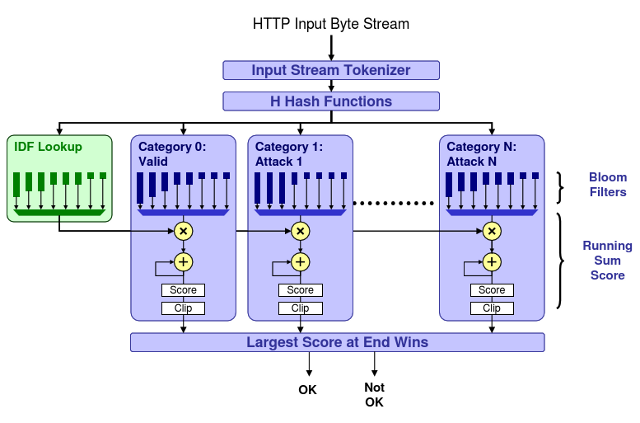
We published unclassified unlimited release (UUR) papers on detecting web attacks in FPGA network filters via Bloom filter arrays.
Publications

Presentations

Data Warehouse Appliances for Mesh Analysis

2010-01-07 Thu
io mesh pub

We published an unclassified unlimited release (UUR) paper and technical report comparing different storage-focused analytic platforms.

Abstract

As scientific computing users migrate to petaflop platforms that promise to generate multi-terabyte datasets, there is a growing need in the community to be able to embed sophisticated data analysis algorithms in the storage systems for the computing platforms. Data Warehouse Appliances (DWAs) are an attractive option for this work, due to their ability to process massive datasets efficiently. While DWAs have been proven effective in data mining and informatics applications, there are relatively few examples of how DWAs can be integrated into the scientific computing workflow. In this paper we present our experiences in adapting two mesh analysis algorithms to function on two different DWAs: a SQL-based Netezza database appliance and a Map/Reduce-based Hadoop cluster. The main contribution of this work is insight into the differences between the two platforms' programming environments. In addition, we present performance measurements for entry-level DWAs to help provide a first-order comparison of the hardware.

Publications